
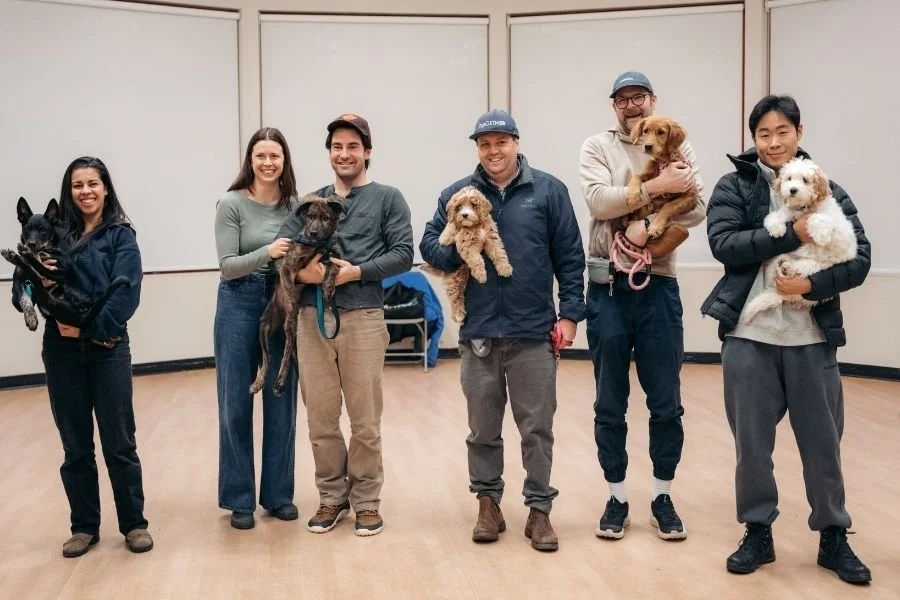
Group classes in Whistler.
Small, force-free classes at Myrtle Philip Community Centre. Five dogs at most, so I can help every one of you, and your dog learns that training is a game.
Pick your class
Life Skills classes for puppies and teenage dogs, plus Parallel Walks. Every class is reward-based. Prices are before GST and include card fees.
Beginner
$185 · 4-week series
Set your puppy up for life. We cover clicker training and the essentials (‘leave’, ‘drop’, ‘down’ and ‘touch’), plus how to prevent biting, chewing and jumping up.
Puppies 8 to 20 weeks with their first vaccinations. Tuesdays at 5:30 PM, September to June, in the Millar Room at Myrtle Philip. Five puppies maximum.
Intermediate
$185 · 4-week series
Get through the teenage months with ease. We build ‘wait’, ‘settle’, ‘touch’ and ‘heel’, then make them hold up around distractions and for longer.
Dogs 5 to 24 months with their third vaccinations. Year-round at Myrtle Philip, indoors and on the sports fields. Five dogs maximum. Beginner or other positive-reinforcement training first is strongly recommended.
Parallel Walks
$25 per walk
A calm, structured walk for dogs who find other dogs hard. Your dog works at a distance they can handle, which builds confidence and better feelings about other dogs. Great for socialization, leash manners and excitable dogs too.
Thursdays at 5 PM on the Lower Myrtle Philip Sports Fields, May to October. Every size, age and breed welcome.
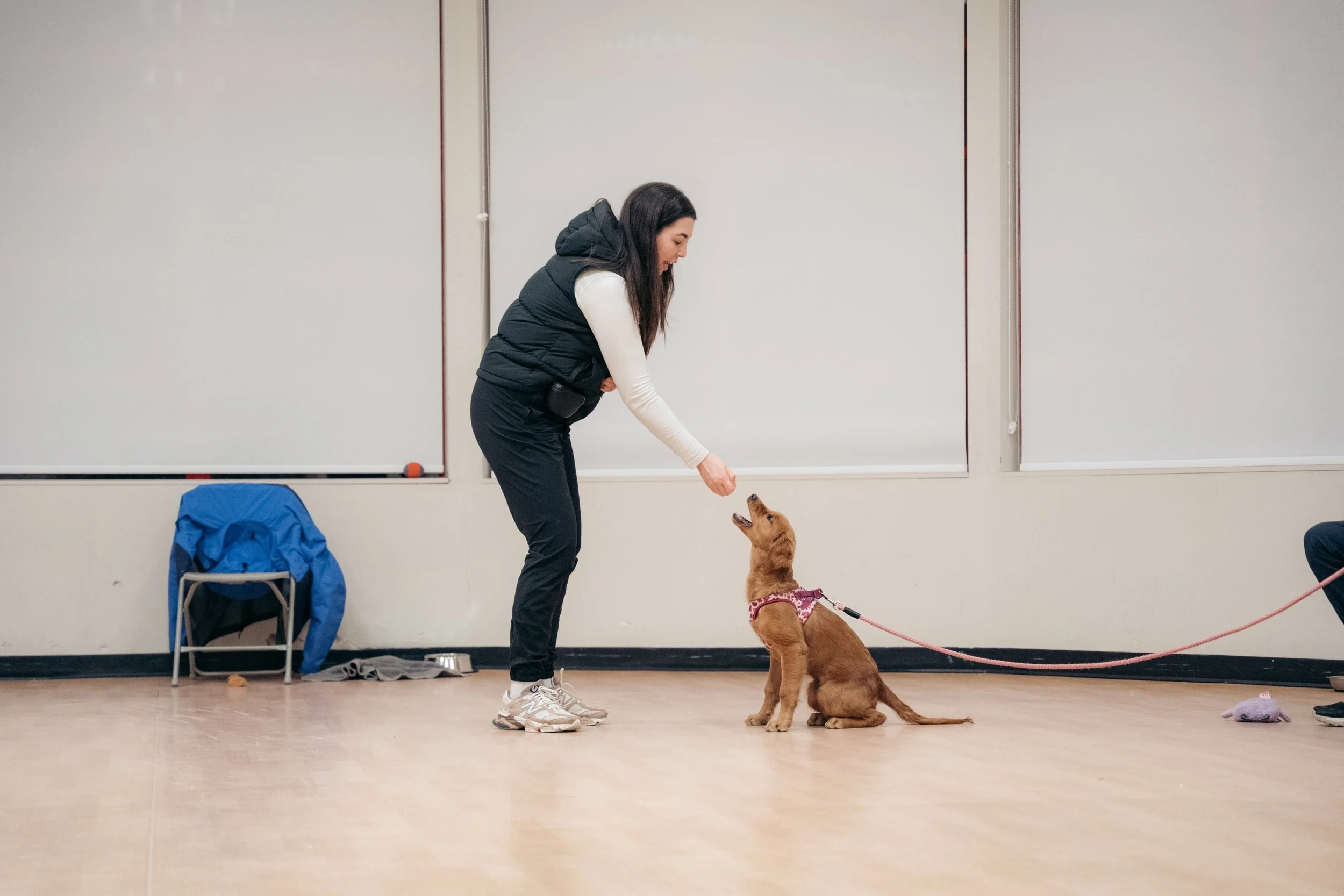
Why small classes work
Puppies and teenage dogs learn fastest when they feel safe. With five dogs in the room, nobody gets overwhelmed, and I can watch every dog and coach every guardian.
You leave each week with a short list of things to practise at home, and the reasons behind them, so the skills keep working long after class ends.
Before you book
-
Life Skills: Beginner is for puppies 8 to 20 weeks with their first round. Intermediate is for dogs 5 to 24 months with their third round. Private sessions are arranged case by case.
-
Yes, as long as they’re happy to sit and watch without distracting the puppies. Learning alongside you is a great way for the whole family to be consistent at home.
-
I recommend one. A clicker sounds exactly the same every time, which makes it the clearest way to tell your dog “that’s it.” A marker word like “yes!” works too, for times you don’t have a clicker with you, for dogs who are hard to handle, or if a clicker is tricky for your hands.
-
No. While your dog is learning something new we reward generously. Once it feels easy for them we move to rewarding some of the time, and your dog keeps responding just as reliably. Every dog needs a reason to work, so for some dogs that reward becomes play with a favourite toy.
-
Almost always. A dog who will not eat is usually too worried to eat, which tells us where to start.
Not sure which fits?
Book a free 15-minute call and I’ll point you in the right direction.